


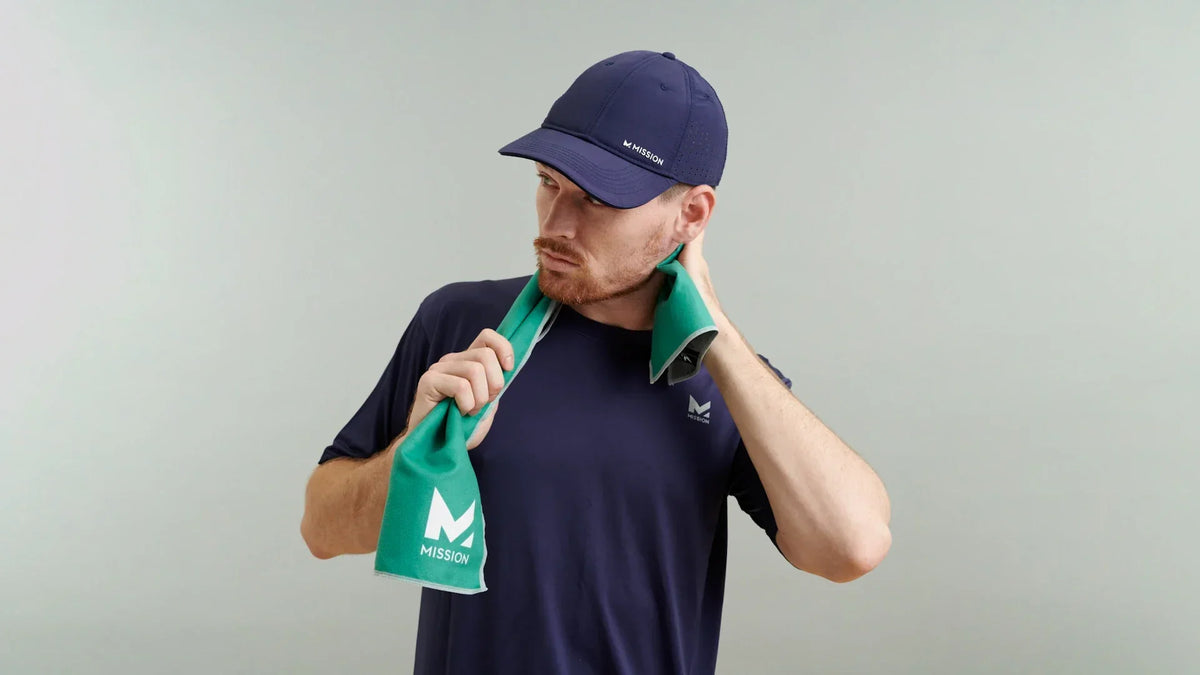
We’re excited to have been mentioned by the WSJ in their recent article about how to beat the heat. Joel, an experienced UPS driver, gives tips on staying cool, including using our cooling technology in his daily work
Read more here
Why extreme heat demands more than just shade and water
The human body cools itself through the evaporation of sweat. When air temperature approaches or exceeds skin temperature, that system starts working against you. According to the National Institute for Occupational Safety and Health (NIOSH), core body temperature can climb during sustained outdoor exertion faster than most people expect. Staying ahead of that is easier than catching up to it.
Staying hydrated matters. But hydration alone does not keep your surface temperature down when you are exposed to direct sun and extreme temperatures for hours at a time. That is where wearable cooling fills a gap that drinking water and finding shade cannot.
How evaporative cooling actually works
Wet, wring, wave. This three-step activation is the basis of MISSION's evaporative cooling technology, and it works because of what happens within the fabric's structure once it's saturated with moisture.
Our fabric is engineered to draw moisture across a large surface area and hold it there. As the moisture slowly evaporates, it pulls heat away from your skin more efficiently than a regular wet cloth. The main difference between MISSION’s material and a standard wet cloth is how long that process lasts and how consistently it maintains contact with your skin.
Our cooling towel, for example, stays cool up to 2+ hours after activating in typical conditions. A standard cotton towel holds water, but it becomes oversaturated, excessively drips water, and loses contact with skin quickly. Cooling fabric is designed to prevent those problems, providing you hours of instant cooling relief.
The physics here is not new. Evaporative cooling is the same principle behind why wind makes you feel colder after a swim. What the fabric engineering adds is duration, wearability, and consistent surface contact.
Why it works
The delivery driver version of heat management focuses on function and comfort. After years of iteration, the pattern that works for sustained outdoor exposure in extreme heat looks like this:
-
Head and neck coverage first. The head and neck are the highest-priority surfaces for cooling. Covering them with wearable cooling reduces your perceived temperature faster than covering any other body part.
-
Light compression or fitted cuts over loose fits. Loose fabric flaps away from skin. Fabric that stays in contact with skin transfers cooling more efficiently.
-
Reactivation on a schedule, not when you feel desperate. Waiting until you are overheated to reactivate your cooling gear means you have already lost ground. Wring it out and wave it to activate your next stretch of staying cool.
-
Layers that work together. A cooling towel around the neck, a cooling shirt, and a cooling hat with UV protection create overlapping zones of temperature management.
None of this requires expensive gear or complicated prep. It requires knowing what you are doing and doing it before you need it.
The difference between cooling gear and regular athletic wear
Standard moisture-wicking fabric moves sweat away from your skin and into the air. But it is not the same as evaporative cooling.
Wicking fabric dries fast. Evaporative cooling fabric is designed to trap moisture longer while cooling you as it dries. The distinction matters when temperatures are high enough that drying fast means losing your cooling benefit in under 20 minutes.
MISSION's cooling gear is built to maintain a cooling effect for up to 2+ hours, which covers most work shifts, training sessions, or outdoor outings without requiring constant reactivation. For someone doing a four-hour outdoor shift, that means reactivating gear once or twice rather than every 20 minutes.
For outdoor workers doing physically demanding tasks, that durability gap is the difference between gear that is useful and gear that is inconvenient enough that people stop using it.
How to use cooling clothing for extreme heat the right way
Getting the most from evaporative cooling gear takes about 60 seconds to learn and pays off across every session you wear it.
Activation: Wet with water (or sweat), wring out the excess water, and wave to activate the cooling technology. The fabric will cool up to 30 degrees below average body temperature within 60 seconds,
Fit and placement: Position your cooling towel so it maintains contact with skin, particularly at the neck and wrists where blood vessels run close to the surface. Cooling those points has a disproportionate effect on how cool your whole body feels.
Reactivation: When the cooling effect fades, rewet and wave it again. There is no limit on the number of reactivation cycles. The technology is woven into the fabric, not a chemical coating that depletes.
A good cooling strategy is key for staying comfortable all day long, and may include multiple approaches. Our cooling gear is designed to be an effective component of that strategy, which includes hydration, rest, and shade.
Everyone benefits from wearing cooling gear in the heat
It’s not just athletes and extremely active people who get the most out of evaporative cooling clothing. Anyone who has sustained unavoidable exposure to heat, with limited access to shade or air conditioning, can be vulnerable.
-
Outdoor workers in construction, landscaping, delivery, and agriculture who are on-site for full shifts in direct sun
-
Runners and cyclists training in summer conditions where performance drops alongside temperature
-
Gardeners and golfers who spend two to four hours outdoors in the middle of the day
-
Spectators and event attendees at outdoor venues where movement is limited and heat exposure is high
The common thread is time in the heat without an easy exit. For casual beach trips or short outdoor outings, any cooling product will work fine. For sustained exposure, the duration and consistency of evaporative cooling make a meaningful difference.
Browse MISSION's cooling clothing for extreme heat to find the specific pieces that fit your activity and exposure level.